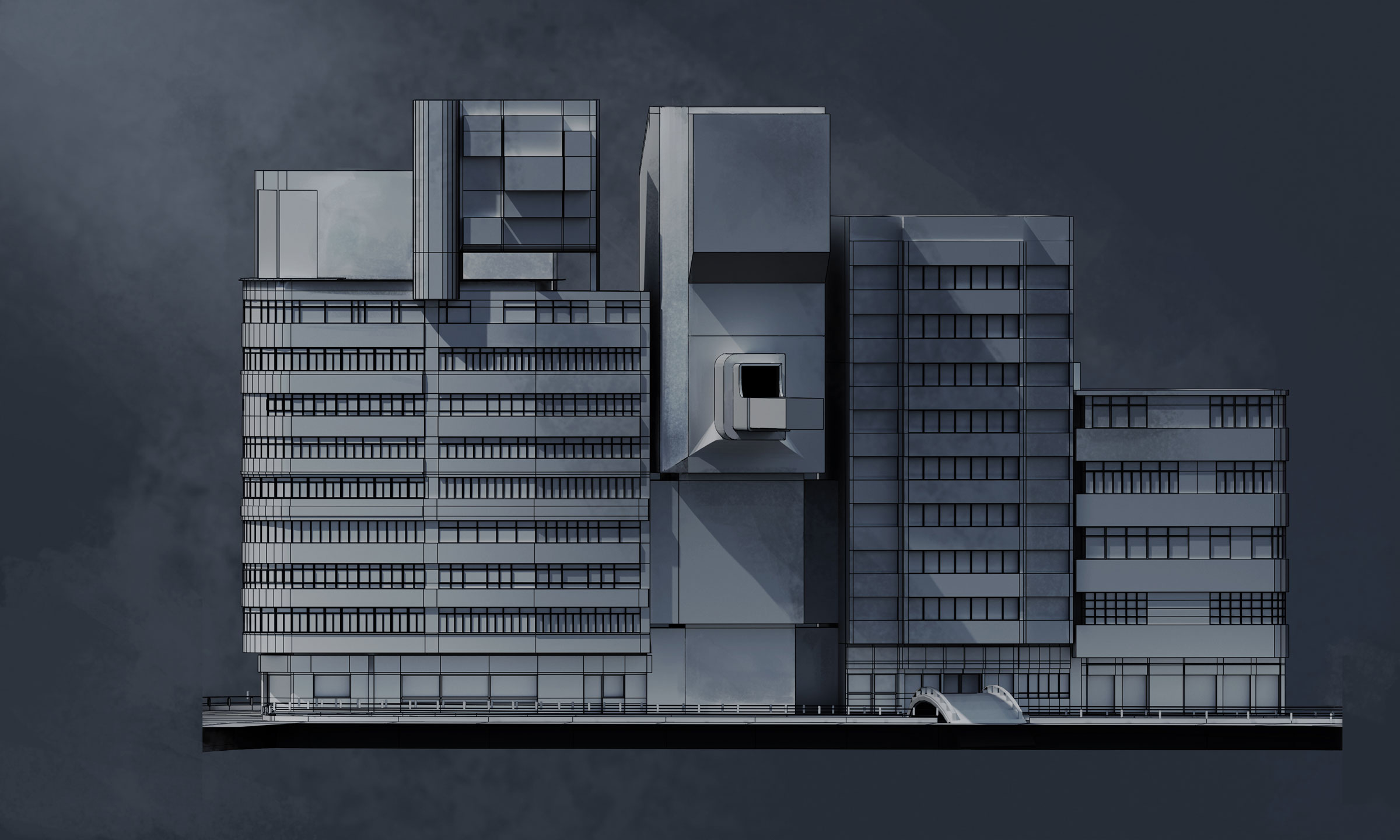
I have always been fascinated by the works of Katsuhiro Otomo and Mamoru Oshii. For a long time, I didn’t realize how strongly their visions shaped the way we perceive sci-fi and the cyberpunk genre today. The dark atmosphere, neon lights, and Asian signage have become so familiar that they now form a kind of visual canon of the future.
Yet this imagery has deeper roots. It stems from the concept of techno-orientalism – the way the West has historically portrayed the East through futuristic aesthetics. Since the 1980s, Western imagination has linked technological progress with an idea of “Asian otherness” – fascinating, yet distant and incomprehensible. This visual framework, marked by cultural stereotypes and racial projections, has evolved into a global canon of futuristic imagery, a lasting aesthetic legacy of how the West once imagined the Orient.
In my project Neo Hong Kong, I chose to engage with this canon consciously. I combined architectural elements typical of Hong Kong with masses of sci-fi design, creating a world that feels worn, inhabited, and believable. The work draws on a principle known from Star Wars – a vision of the future that is paradoxically already the past.
The city is divided into vertical layers: the lower level of poverty, the middle level of the working class, and the upper sphere of techno-oligarchs. This vertical hierarchy reflects a strange paradox – a hyper-technological future still bound by social stratification reminiscent of a neo-feudal society. It is, in essence, a metaphor for the present – a future that quietly creeps closer, taking shape within the very systems and desires of our time.